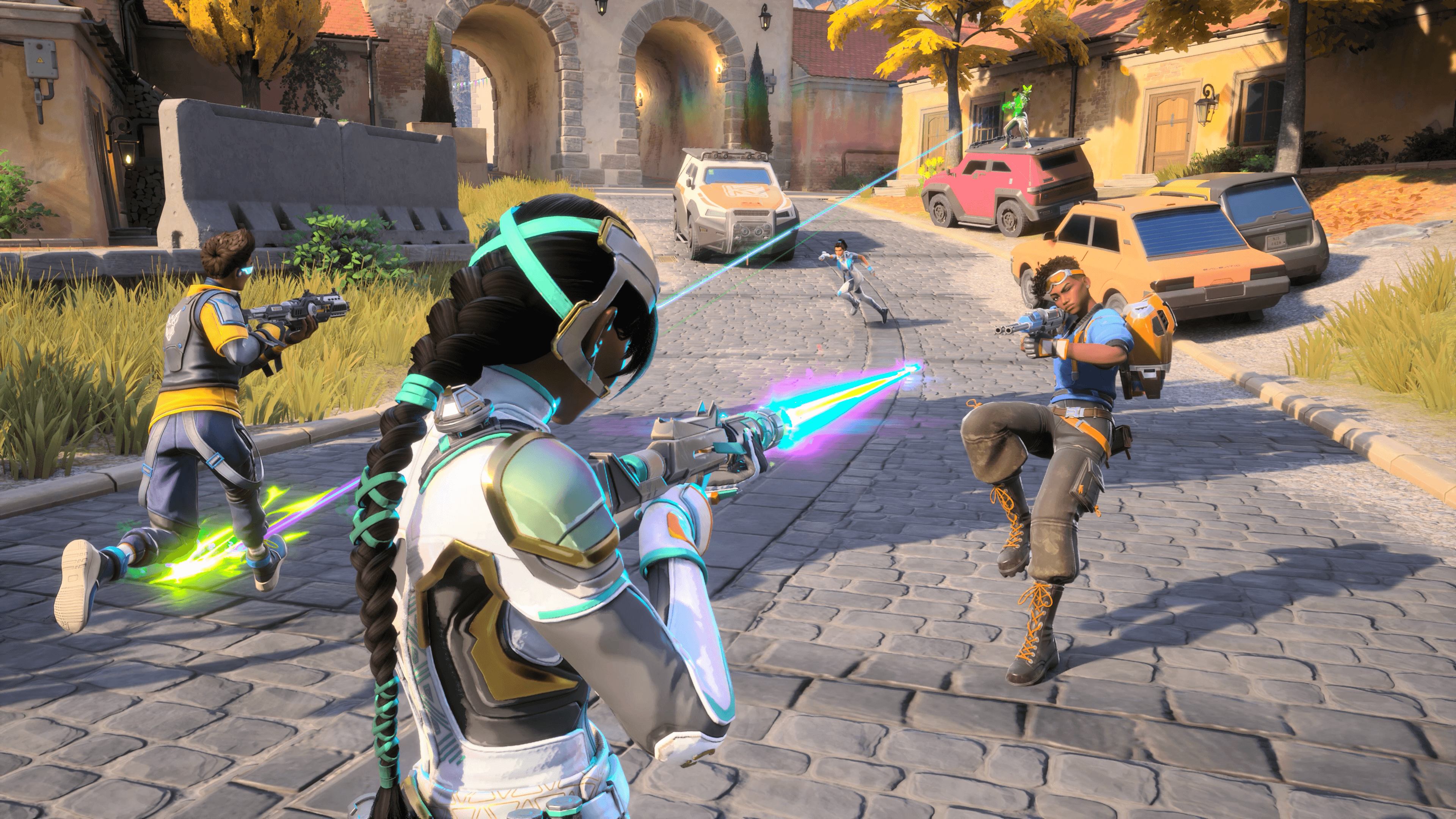
Project Ethos is a free-to-play third-person roguelike hero shooter in development at 31st Union. Featuring extraction, gauntlet, and battle royale modes, the game's UI had to flex across vastly different contexts — HUDs, progression systems, and a rogue-like upgrade layer — all within a cohesive visual system.
I joined a lean UI team and owned high-fidelity mockups for the HUD, reticle system, and the rogue-like progression layer. I developed UI material shaders in Unreal Engine used in game builds, and collaborated closely with UX to define interactions for systems that are visible in the current public release.

This project is under NDA. What I can show below represents shader and animation work developed during this period. This is merely a window into the technical depth of the UI systems I was building.
Material Work

Dot Cloud Material
A procedural dot shader built entirely with math and a cloud map for UV distortion. Exposed parameters control dot density, distortion intensity, and sharpness. The system is designed to respond to gameplay data: as a player's health drops, dot tint shifts red and flow intensity increases, adding urgency without pulling focus from the game. View the blueprint here.

Animation
A single notification widget that handles both primary and secondary message types — determined at runtime by event data. One animation sequence, two possible outcomes, zero redundant widgets.
Project Ethos pushed me into technical territory I hadn't fully explored before. I arrived as a visual designer and left having extensive knowledge on material shaders in a production Unreal Engine environment. The ability to think in systems and to design a shader that responds to game state rather than just looking good in isolation changed how I approach every UI problem since.